Turn Sydney Harbour Into Your Investor Roadshow Edge
Investor meetings can start to blur together when they all happen in the same hotel boardrooms and CBD offices. For people who see pitch after pitch, the setting often feels predictable, even when the opportunity is strong. When you are raising capital, anything that helps serious investors focus, remember you, and stay engaged is worth planning with care.
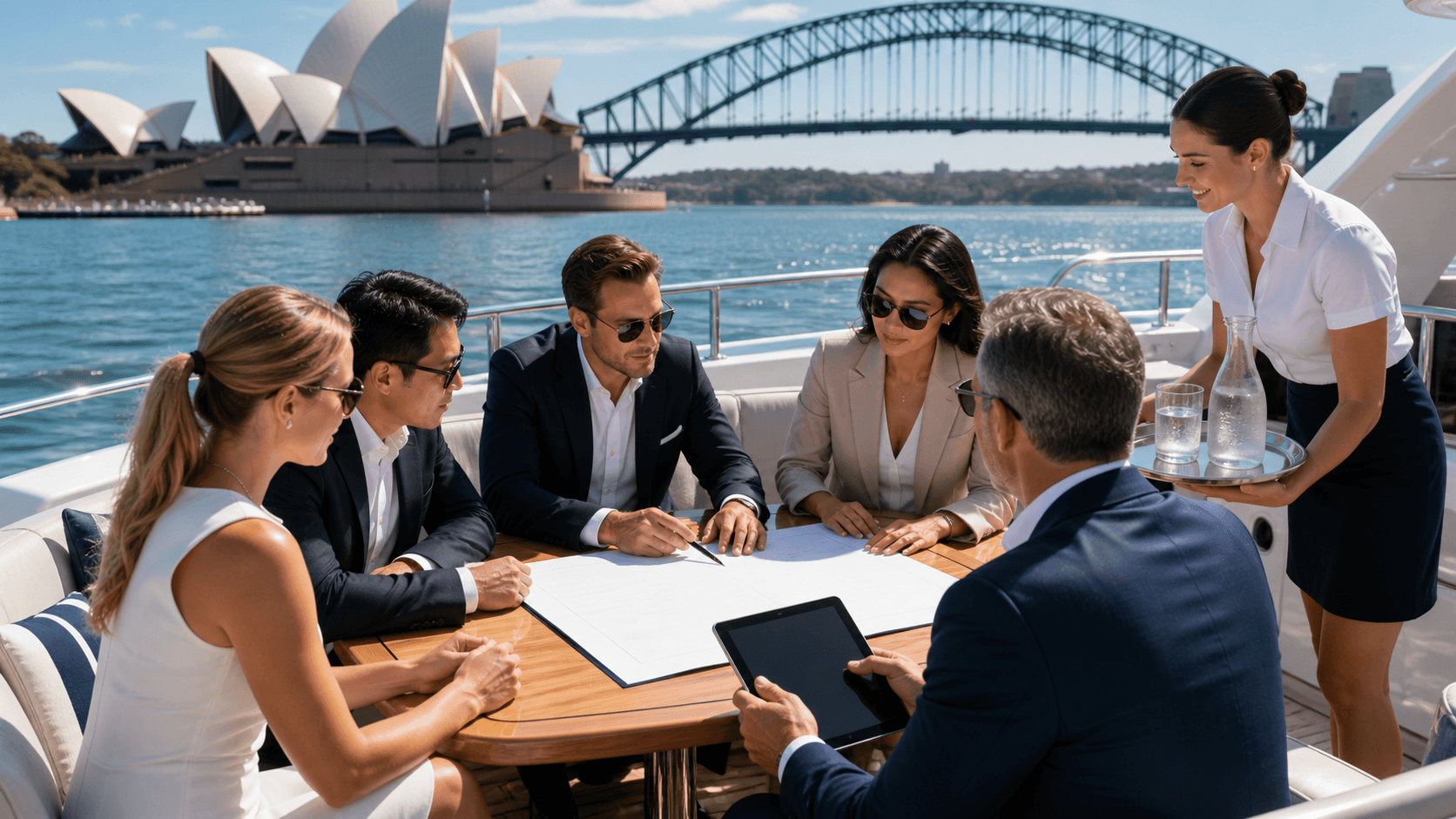
A private Sydney Harbour luxury experience can become a smart platform for your investor roadshow. Instead of dragging people across town, you bring a floating boardroom to the wharf closest to them, then move smoothly on to the next stop. You get focused conversations, a memorable backdrop, and efficient multi-stop scheduling in a single well-structured day.
On our Riviera 525 SUV, we think of the yacht as an agile meeting space that happens to glide between the Opera House, the Bridge, and the headlands. Below, we set out a practical playbook for shaping your harbour investor roadshow: itinerary sequencing, onboard AV and Wi-Fi setup, compliance and confidentiality, plus hospitality touches that help the story stick.
Mapping a Multi-Stop Harbour Itinerary That Works for Investors
The first decision is where you start and finish each leg. To keep things frictionless for busy investors, choose wharves that are close to office clusters and easy to reach on foot.
Good options often include:
- Barangaroo and King Street Wharf
- Circular Quay
- Milsons Point
- Darling Harbour
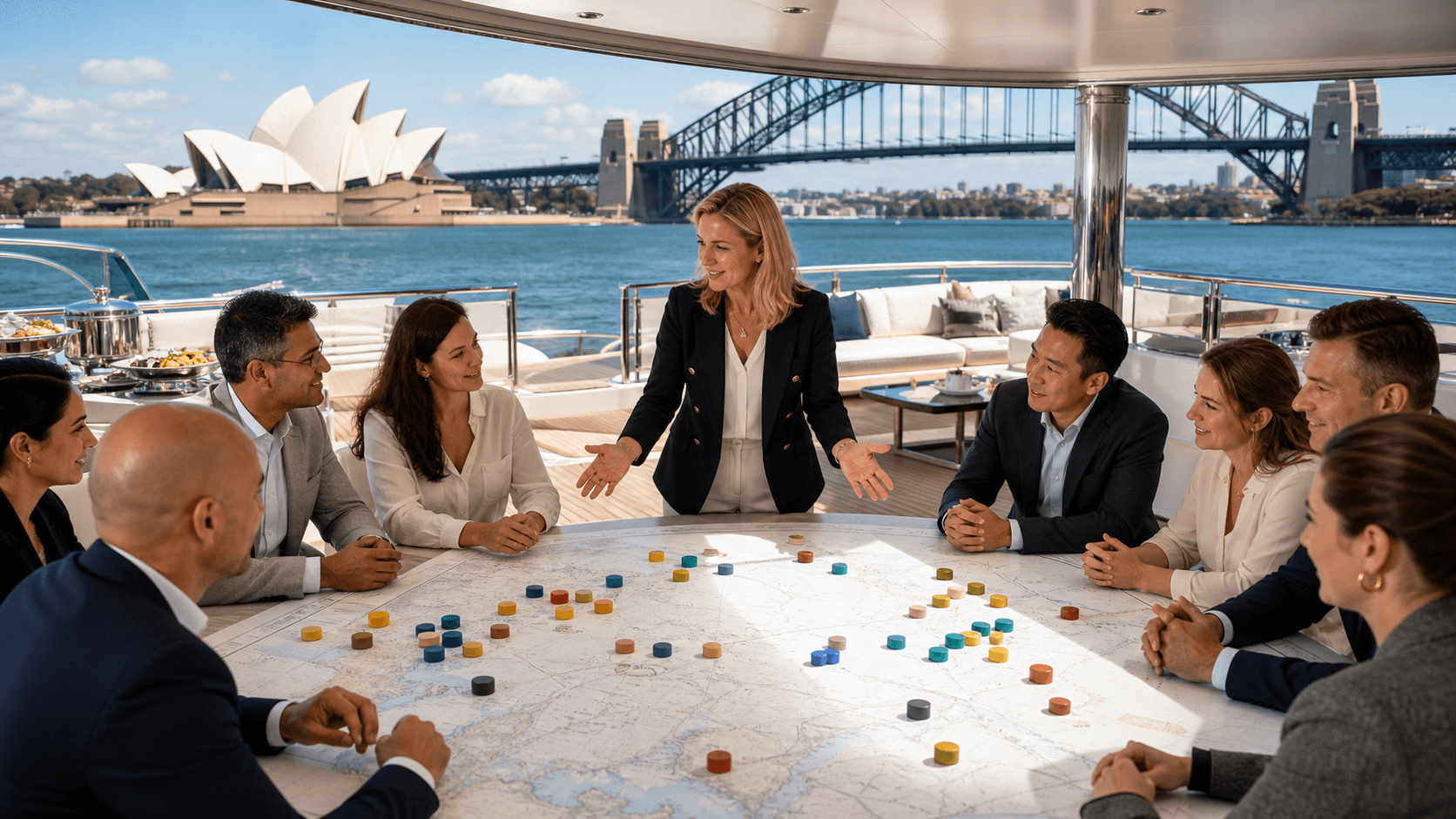
Think of the day as a loop of investor types and priorities. For example, you might:
- Start the morning with anchor investors who need deeper time
- Schedule family offices or smaller funds over late morning and early afternoon
- Finish with strategic partners or advisers who can be a little more flexible
Spring and early summer usually give you good light and comfortable temperatures on Sydney Harbour. When you plan your route, factor in tide timings, typical traffic on the water, and how calm you want the ride to feel. Shorter, more sheltered legs can help guests who are not used to boats feel steady and relaxed.
Structure the content of each leg to match the investor type:
- Faster 45- to 60-minute loops for chemistry checks and high-level overviews
- Longer segments for full model walkthroughs or product deep dives
- Dedicated blocks for media or analyst briefings if needed
Always build in buffer time. Meetings that go well often run long, so it helps to have backup pickup points and flexible timing between stops. Your skipper can suggest realistic transit times and quieter wharves that work as backups.
You also want to balance focus with the harbour setting. Plan a few "wow" route sections, like a slow pass by the Opera House and under the Harbour Bridge, between heavier sessions. These moments give everyone space to stand up, chat, and reset without losing the professional tone.
You can even plan subtle camera moments, such as a group photo on the foredeck during a natural pause. Done well, the setting becomes a mental anchor, so when investors think back to your pitch weeks later, they remember not only the water and skyline, but also your numbers and story.
Setting up a High-Performance Pitch Room Onboard
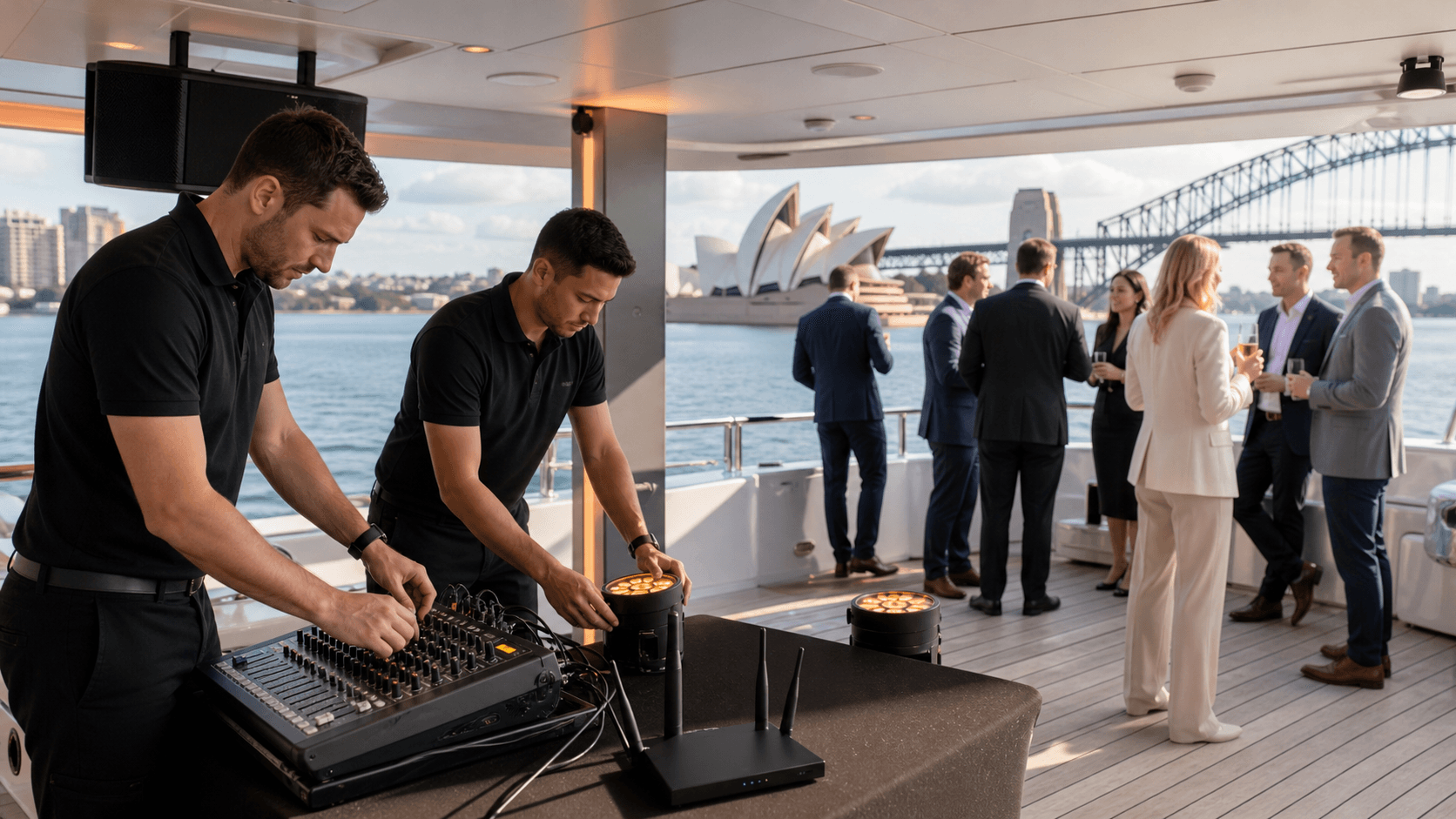
A floating pitch room needs the same technical care you would put into any serious boardroom, plus a bit more planning for movement and signal changes.
For AV, aim for:
- A large screen that is easy to see from all seats
- HDMI connectivity and spare adaptors for common laptops
- Clear audio that can handle video calls or demos
- Simple controls so you can switch sources quickly
Wi-Fi is another key point. A dedicated mobile broadband setup that has been tested along your planned route helps keep hybrid meetings smooth. Still, always keep offline versions of decks and a local copy of any key data. If a connection drops for a few minutes, you can continue without stress.
If global investors are joining by video, schedule those calls in the calmest parts of the route. Share clear joining details ahead of time and have one person on your team responsible only for the virtual side of the meeting.
Physical layout also matters on a boat. Try to:
- Seat guests facing forward or towards stable visual points
- Keep clear sightlines to both presenter and screen
- Separate the main pitch area from the open deck where people can relax later
Pay attention to lighting. Natural light on Sydney Harbour is beautiful, but glare on screens is not. Soft interior lighting and blinds where needed will help. For sound, choose a spot with less engine and wind noise, and make sure there are convenient power points for laptops and devices.
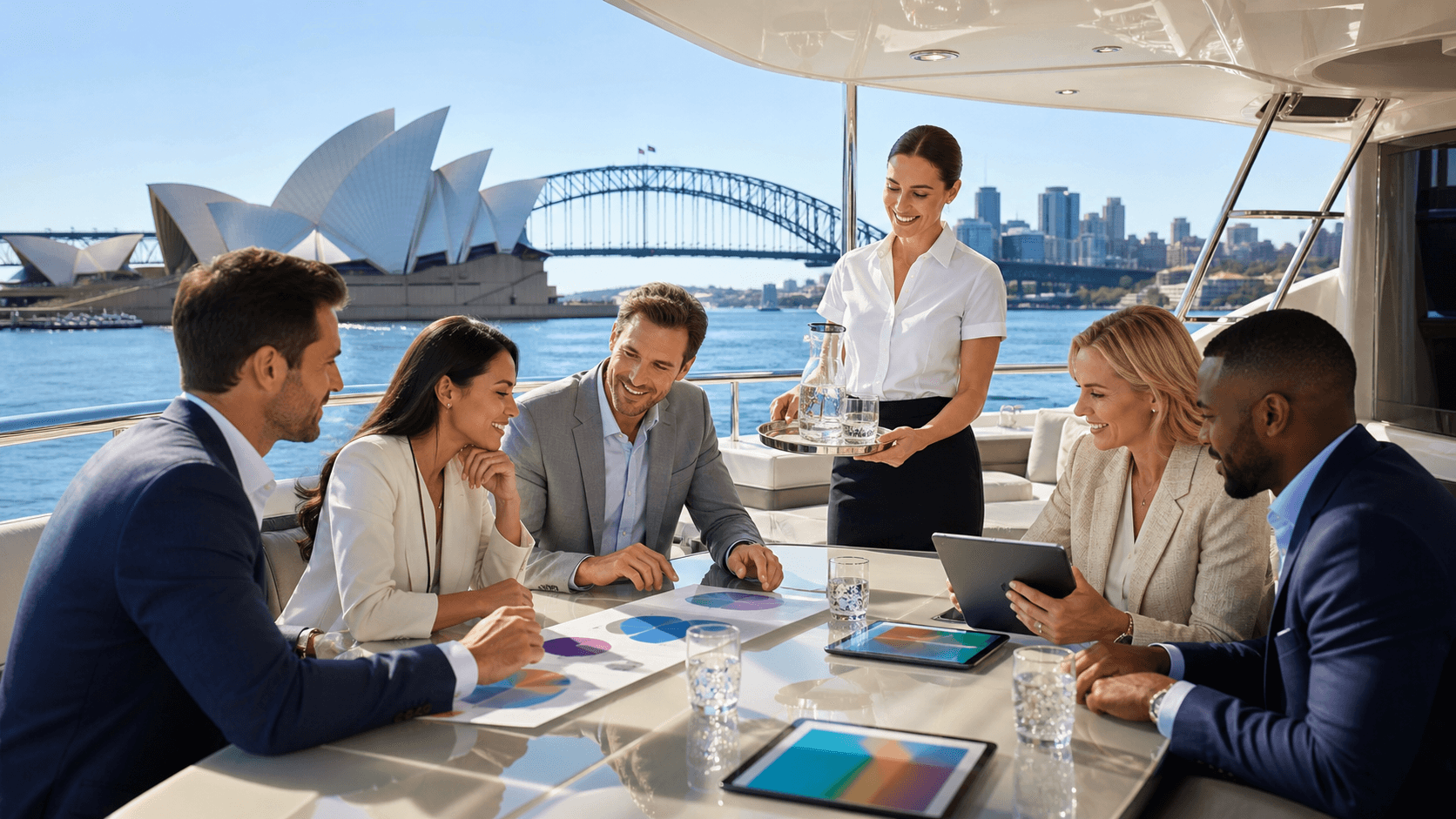
The atmosphere should feel premium but not loud. Understated branding on printed materials, tablet stands, and a small welcome board works well. Catering should support attention, so think light, neat food that does not distract from the discussion, with good coffee and cold drinks timed around, not through, key pitch moments.
On a yacht like the Riviera 525 SUV, we can pre-set seating, AV, and service flows to match a tight roadshow agenda, so your team can focus fully on presenting.
Compliance, Confidentiality and Investor Expectations
Treat the yacht as a mobile secure meeting room. Many of the same rules that apply in a boardroom should apply here too.
Before the day, you can:
- Send NDAs for digital signing
- Confirm recording policies for both in-person and virtual sessions
- Mark which parts of the day are on or off the record
Onboard, keep physical confidentiality in mind:
- Seat people so that sensitive screens are not easily visible from outside the group
- Use privacy filters if you are working through detailed numbers
- Arrange for any printed material to be securely removed or shredded after meetings
In some ways, a private vessel can actually reduce casual eavesdropping compared with a busy hotel lobby or café, as long as doors are managed and guest lists are clear.
For data security, treat the boat as an extension of your office:
- Use a unique Wi-Fi network name and password for the day
- Avoid logging into sensitive internal systems unless you really need to
- Rely on secure virtual data rooms for sensitive files instead of sending email attachments
It also helps to brief crew on privacy protocols, including which areas stay off-limits to other visitors during meetings and how to handle photos. Not every investor will want their image or presence shared, so check before any cameras come out.
Even with a relaxed harbour setting, standards stay high. A simple guideline is "boardroom on the water." That means:
- Business or smart casual dress, depending on your investor base
- Clear conduct expectations for your own team
- Limited alcohol, with any celebratory drinks left to the end of the formal agenda
Let investors know in advance what to expect: that this is a serious working session in a distinctive environment, not a leisure cruise.
Designing Hospitality Touchpoints That Deepen Investor Buy-In
Thoughtful hospitality can quietly support your capital raise, without feeling over the top or salesy.
Strong first impressions at each stop might include:
- Personal name cards at seats or on a small welcome table
- A brief printed agenda or briefing note tailored to that investor type
- A short welcome from the captain to set expectations on safety and timing
Subtle local touches, such as native florals or a seasonal menu, help the day feel grounded in Sydney rather than generic. Timing is important, too. Aim for calm, unhurried arrivals where guests are met at the wharf or swim platform by someone from your team, not kept waiting or rushed.
Use the harbour itself to underline your narrative. You can:
- Line up innovation themes as you cruise past key city precincts
- Talk about resilience or scale as the skyline opens up
- Use quieter coves or headlands as relaxed spaces for Q&A
Moving between the interior and decks can give natural breaks between sections of your story, almost like chapters. Investors may feel more comfortable asking tougher questions on the foredeck or aft deck, where the tone shifts slightly from formal presentation to open discussion.
After the day, follow-up is where momentum turns into action. Simple steps include:
- Same-day emails with concise next steps and key materials
- A short note referencing a specific part of your harbour conversation
- A shared photo from the yacht, if everyone is comfortable with that
Your internal run sheet, wharf list, and guest manifest can flow straight into your CRM. Record who joined which leg, what topics sparked interest, and what needs to happen by which date. That way, the Sydney Harbour luxury experience is not just a great day on the water. It is the start of a clear path toward closing your raise.
Turn Your Next Capital Raise Into a Harbour-Ready Strategy
A well-planned investor roadshow on Sydney Harbour can compress multiple high-impact meetings into a small number of days, while standing out from the standard circuit of offices and hotels. When the yacht is set up as a true floating boardroom, the setting quietly supports sharp thinking and serious discussion instead of distracting from it.
At Dolly Boat Charter, we work with founders, CFOs, and investor relations teams to shape harbour days that line up with real capital raise objectives. With clear planning across itinerary, AV, confidentiality, and hospitality, the boat fades into the background as a trusted space, leaving investors focused on what really counts: your story, your numbers, and the opportunity to come on board with confidence.
Transform Your Next Harbour Event Into A Lasting Impression
Elevate your corporate gathering with a tailored Sydney Harbour luxury experience that reflects your brand and delights your guests. At Dolly Boat Charter, we work closely with you to shape every detail, from timings and routes to catering and onboard ambiance. Share your event ideas and requirements with us via our contact page, and we will craft a clear proposal that fits your objectives and budget.